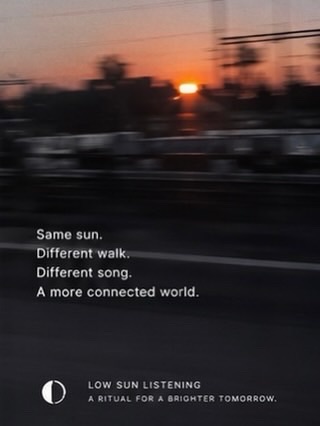
We usually schedule events by the clock.
6:00 PM. Doors open.
7:00 PM. Program begins.
8:00 PM. Performance.
9:00 PM. Event ends.
But what if we scheduled an event by the light?
Imagine an outdoor campus event designed around the last 20 minutes of daylight.
The event might begin while there is still enough sunlight to see the landscape clearly. As the sun gets lower, the environment changes with it. Buildings become silhouettes. Shadows stretch across the ground. Faces look different. The sky becomes part of the atmosphere.
Then, almost imperceptibly, daylight gives way to artificial light.
Nothing has to stop for the transition to happen. The transition is the event.
This could change how we think about music, movement, performances, installations, photography, food, gathering, and even the way people arrive and leave.
Instead of treating sunset as something happening behind an event, we could treat it as one of the event’s materials.
The interesting question isn’t simply:
“What time should the event start?”
It might be:
“What do we want people to experience during the last 20 minutes of daylight?”
Low Sun Listening begins with listening to that transition.
Event design might be another way of listening.


Leave a Reply